
There are no items in your cart
Add More
Add More
| Item Details | Price | ||
|---|---|---|---|
Fresh SSB batches start around the 1st & 15th of every month.
• India and China have goodwill towards us, says Sri Lankan PM
Sri Lankan PM Harini Amarasuriya said India and China have shown strong goodwill toward Sri Lanka. She highlighted achievements in political stability, challenges in state machinery, IMF-related hardships, and the government’s focus on reconciliation with Tamils and introducing a new Constitution through consultation.
• High-intensity explosion in Delhi kills at least 9
A powerful explosion in a slow-moving car near Red Fort killed at least nine and injured over 20. A nationwide alert has been issued as agencies probe all possibilities. CCTV footage, forensic analysis, and interrogation of a detained individual are underway.
• What South Asia wants from COP30
South Asian nations demand stronger climate finance, adaptation support, technology transfer, and inclusion of vulnerable groups. They emphasise regional cooperation, resilient infrastructure, and fair climate governance. The region calls for equitable funding, addressing non-economic losses, and binding commitments from developed nations to meet climate goals.
• Rural unemployment down, urban joblessness up: PLFS
PLFS data shows rural unemployment fell to 4.4%, while urban unemployment rose slightly, especially among women. Rural employment remained dominated by agriculture, while urban areas saw growth in salaried jobs. Labour force participation among rural women increased significantly during July–September 2025.
• All HCs should publish judges’ verdict delivery timelines: SC
The Supreme Court asked all High Courts to publicly disclose how long judges take to pronounce pending verdicts. It stressed transparency, public accountability, and the need to address delays caused by heavy workloads, complexity of cases, and judgments reserved for years.
• Jaishankar chairs meet of Indian envoys in U.S.
EAM S. Jaishankar reviewed bilateral ties, diaspora engagement, and strategic cooperation with Indian Consuls in the U.S. The meeting discussed strengthening partnerships with Washington, enhancing consular services, and aligning diplomatic priorities with India’s broader foreign policy goals.
• Govt aims to award 10,000 km of highway projects by 2026
After a slowdown in recent years, the Centre plans to award 10,000 km of National Highway projects by FY 2026. Approvals had fallen sharply but are now recovering. Around 9,000 km of projects are targeted for award this year, with timelines being streamlined.
• Iran looks to BRICS for crypto-based trade to bypass sanctions
Iran seeks to use cryptocurrencies for trade with BRICS nations to sidestep U.S. and Western sanctions. Officials argue crypto-based settlements can reduce reliance on the dollar. Despite risks and regulatory hurdles, Iran views digital currencies as essential for economic resilience.
• The South at the centre: COP30
At COP30 in Brazil, the Global South is asserting leadership with bold climate-growth initiatives. Brazil pushes industrial transformation, equitable finance, and deforestation control. Despite divisions, developing nations stress justice, local solutions and global support to tackle climate impacts and economic inequality.
• China warns citizens against Japan travel amid Taiwan row
China advised citizens to avoid Japan after remarks by Japan’s PM on potential military action over Taiwan. Both countries summoned each other's envoys. China cited safety risks and rising tensions, while Japanese airlines offered refunds for cancelled travel plans.
• Army sets up three new garrisons near Siliguri Corridor
Indian Army has established three new garrisons in Assam, Bihar and West Bengal to secure the sensitive Siliguri Corridor amid concerns over China and changes in Bangladesh. The move enhances surveillance, rapid response, and coordination with the Border Security Force.
• POCSO Act is gender-neutral by design
A legal analysis states Section 3 of POCSO applies to all perpetrators regardless of gender. Legislative intent, statutory interpretation rules, and purpose of the Act support gender neutrality. The law covers acts by women and protects children from all forms of sexual abuse.
• What are Digital Personal Data Protection Rules?
The DPDP Rules 2025 operationalise the DPDP Act, forming India’s Data Protection Board and setting obligations for data fiduciaries, protections for children, and rights for users. The Act also amends the RTI law, removing the exemption for “personal information,” sparking transparency concerns.
• Jaishankar, Qatar PM discuss bilateral cooperation
India and Qatar reviewed ties in energy, trade, and regional issues. Jaishankar met Qatar’s PM and Foreign Minister, emphasising investment opportunities and strategic collaboration. He also discussed multilateral issues before heading to Moscow for a meeting with Russia’s Foreign Minister.
• Lahore lawyers protest Pakistan’s 27th amendment
Lawyers in Lahore announced a strike against the 27th Constitutional Amendment, which they say undermines judicial independence by curtailing powers of the Supreme Court and enhancing federal control. Bar associations called it an attack on democracy and demanded its withdrawal.
• Need for social audit of SIR 2.0
Concerns over the Election Commission’s Special Intensive Revision in Bihar include mass deletions of voters, targeting minorities, lack of oversight, and potential disenfranchisement. The article demands transparency, defined rules, and a mandatory social audit to protect electoral fairness.
• SC: Perennial GRAP not the solution to Delhi pollution
The Supreme Court said GRAP cannot be a year-round measure and called for a long-term policy that protects livelihoods. It urged the Centre to address structural causes like crop burning cycles and urban emissions instead of relying on repetitive emergency actions.
• India must ‘connect, build and revive’ with Africa
India’s engagement with Africa has grown in trade, education, security, and development partnerships. The article stresses strengthening financial cooperation, creating an India-Africa digital corridor, and revitalising institutional mechanisms like the IAFS for long-term strategic influence amid competition from China.
• India-China ties improving, says Army chief
Army Chief Gen. Upendra Dwivedi said India-China relations have improved since October 2024 through sustained dialogue. He noted progress on border talks, better military mechanisms, and India’s preparedness for any scenario, while stressing swift, coordinated responses to terrorism and future threats.
• Trade impacts of climate action flagged at COP30
Developing nations, including India, urged COP30 to address trade effects of climate policies such as CBAM. They emphasised fair transition, climate finance gaps, and avoiding protectionist measures. Brazil seeks to reduce tensions between developing and developed countries over carbon-related trade rules.
• Centre hikes print advertisement rates by 26%
The I&B Ministry approved a 26% hike in print ad rates to support the media ecosystem. Black-and-white ad rates rose significantly. New rates follow committee recommendations and aim to sustain newspapers amid rising costs and revenue challenges.• Maoist movement suffers a serious setback
Andhra Pradesh police killed top Maoist leader Madvi Hidma, his wife, and associates in an encounter. Hidma, a key strategist behind major attacks, carried a ₹50-lakh bounty. His death is seen as a major blow to the CPI (Maoist), whose strength has sharply declined.
• 51 Maoists arrested in A.P. operation
OCTOPUS and State police arrested 51 Maoists across five districts in a large coordinated operation. Hidma’s cadre members were among those captured. Officials say Maoists are shifting to urban hideouts. Ammunition, cash, and weapons were seized as search operations continue.
• Indonesian Defence Minister to visit Delhi for BrahMos talks
Indonesia’s Defence Minister will visit New Delhi to advance negotiations on procuring the BrahMos missile. The meeting follows progress in bilateral defence cooperation. Officials see the deal as boosting India's defence exports and showcasing its indigenous missile manufacturing capabilities.
• Over 100 Indian universities in QS sustainability rankings
India ranks fourth globally with 103 universities featured in the QS Sustainability Rankings 2026. IIT Delhi, IIT Kharagpur, and Delhi University performed best nationally. The rankings assess environmental impact, employability, governance, and knowledge exchange across 2,000+ institutions worldwide.
• Nitish Kumar to be sworn in as CM for 10th time
Nitish Kumar was unanimously elected leader of the NDA Legislature Party and will become Bihar Chief Minister for a record tenth term. Meetings with NDA partners finalised leadership positions, with MLA Prasad Maurya likely to remain central observer.
• India’s Russian oil cuts predate U.S. tariffs: data
Government data shows India reduced Russian oil imports months before the U.S. imposed a 25% tariff in August 2025. Imports fell in eight of the previous ten months, reflecting a long-term strategy to diversify energy dependence, not a reaction to tariffs.
• Taliban Industry Minister begins India visit
Afghanistan’s Taliban Industry and Commerce Minister Nooruddin Azizi began a five-day India visit to boost trade ties and reduce reliance on Pakistan. Meetings with Indian officials and business leaders aim to strengthen air and land corridors and enhance Afghan participation in Indian trade events.
• SC strikes down parts of Tribunal Reforms Act
The Supreme Court invalidated provisions of the 2021 Tribunal Reforms Act, ruling they undermined judicial independence by giving the Centre excessive appointment powers. The court directed the government to create a new, constitutionally sound commission for tribunal appointments and administration.
• Supreme Court allows CAQM ‘proactive’ steps on Delhi pollution
The SC authorised the CAQM to take proactive short- and long-term measures against Delhi’s worsening air pollution. It highlighted urgency in curbing emissions, faster implementation of GRAP recommendations, and protecting schoolchildren during severe pollution episodes.
• Judiciary cannot impose timelines on President or Governor: SC
The Supreme Court held that courts cannot force Governors or the President to follow fixed timelines to approve or return State Bills, calling such directives unconstitutional. However, it criticised prolonged delays and reaffirmed the need for accountability and timely action.
• Election data analysis: from the dark ages to the AI era
The article recounts the evolution of election data analysis—from manual scraping and slow workflows to AI-driven tools that automate mapping, charting, and prediction. New technologies now allow faster, accurate election reporting without replacing journalists.
• India’s fisheries and aquaculture show promising growth
India is now the world’s second-largest aquaculture producer, driven by technological innovation and government schemes like PMMSY. Challenges remain—overfishing, pollution, limited finance—but FAO collaboration and India’s Blue Revolution efforts aim to strengthen sustainability, value addition, and export growth.• Is air pollution a South Asian crisis?
Air pollution in South Asia has intensified, with the 2024 India-Pakistan smog highlighting cross-border pollution. The Greenpeace report links worsening AQI to fossil fuel dependence, poor governance, and rapid urbanisation. Experts call for long-term regional cooperation, governance reforms, and sustainable economic pathways.
• At COP, India seeks ‘just transition mechanism’
India and developing nations have sought a ‘just transition mechanism’ at COP30 to ensure fair financing for countries shifting from fossil fuels. India stressed that climate adaptation funding is essential, not optional, and that nations must define their own development pathways while protecting jobs.
• Jaishankar holds talks with Taliban’s Commerce Minister
India reaffirmed support for Afghanistan’s people in talks with Taliban Commerce Minister Nooruddin Azizi. Discussions focused on strengthening trade, connectivity, and direct commerce while bypassing Pakistan. India encouraged Afghan participation in Indian trade fairs and explored mechanisms to boost bilateral economic engagement.
• Centre notifies four new Labour Codes
The Centre notified all four Labour Codes, replacing 29 older laws to reform wages, social security, industrial relations, and workplace safety. While the government calls them progressive and modern, trade unions criticise them as “pro-employer” and weakening worker protections.
• The new direction for India should be toward Asia
The article argues India’s foreign policy must pivot firmly toward Asia as the region becomes the global economic centre. India should strengthen ties with China, Russia, and ASEAN, reduce reliance on the West, prioritise indigenous innovation, and build strategic autonomy for long-term stability.
• Govt. plans to unify security regulations for 250 seaports
The Union Government has designated CISF as the security regulator for over 250 Indian seaports. A sovereign entity will oversee private ports, ensuring uniform coastal security. CISF will regulate 80 cargo-handling ports, requiring major personnel expansion and coordinated security architecture.
• IAF’s Tejas crashes at Dubai Air Show; pilot dead
An IAF Tejas fighter crashed during the Dubai Air Show, killing Wing Commander Namnash Syal. The jet spiralled out of control and exploded on impact. The IAF ordered an inquiry, while the incident marked the second major Tejas crash since 2024.
• Modi meets Australian PM; discusses cooperation in trade, defence and security
PM Modi met Australian PM Anthony Albanese in Johannesburg, reviewing cooperation in defence, critical minerals, trade, and people-to-people ties. Both leaders reaffirmed commitment to a strong partnership and discussed progress made under the Comprehensive Strategic Partnership.
• Trump’s absence makes G-20 ‘safe’ for Modi, says Congress
Congress stated that PM Modi attended the G-20 Summit “safely” as Donald Trump chose to boycott it. The party argued that Trump’s presence would have revived tense political dynamics. It noted India hands over the G-20 Presidency to Africa next year.
• COP30 draft text skips mention of fossil fuel use
A dispute emerged at COP30 after the draft closing text omitted references to phasing out fossil fuels. Developing nations opposed binding elimination timelines. Delegates expressed disappointment, pressing for stronger commitments to limit warming and align climate goals with equity.
• Guidelines defining ‘obscenity’ in online content proposed
The government has proposed amendments to IT Rules to explicitly define “obscene digital content,” disallowing sexually explicit, abusive, or privacy-invasive material across digital platforms. The move would bring OTT content under stricter rules. Critics say the proposal risks vague, sweeping censorship.
• At G-20 Summit, Modi proposes new initiatives on health and skills
Addressing the G-20 Summit in Johannesburg, PM Modi proposed initiatives focused on global health, clean energy, resilient supply chains, and AI cooperation. Leaders adopted the G-20 declaration on climate action, while Modi advocated for development models centred on human welfare and equity.
COP30 ends with plan for road maps to halt deforestation, curb fossil fuels
‘Major hurdle will be to reduce 90,000 pending SC cases,’ says incoming CJI
New Labour Codes face political pushback; experts flag implementation issues
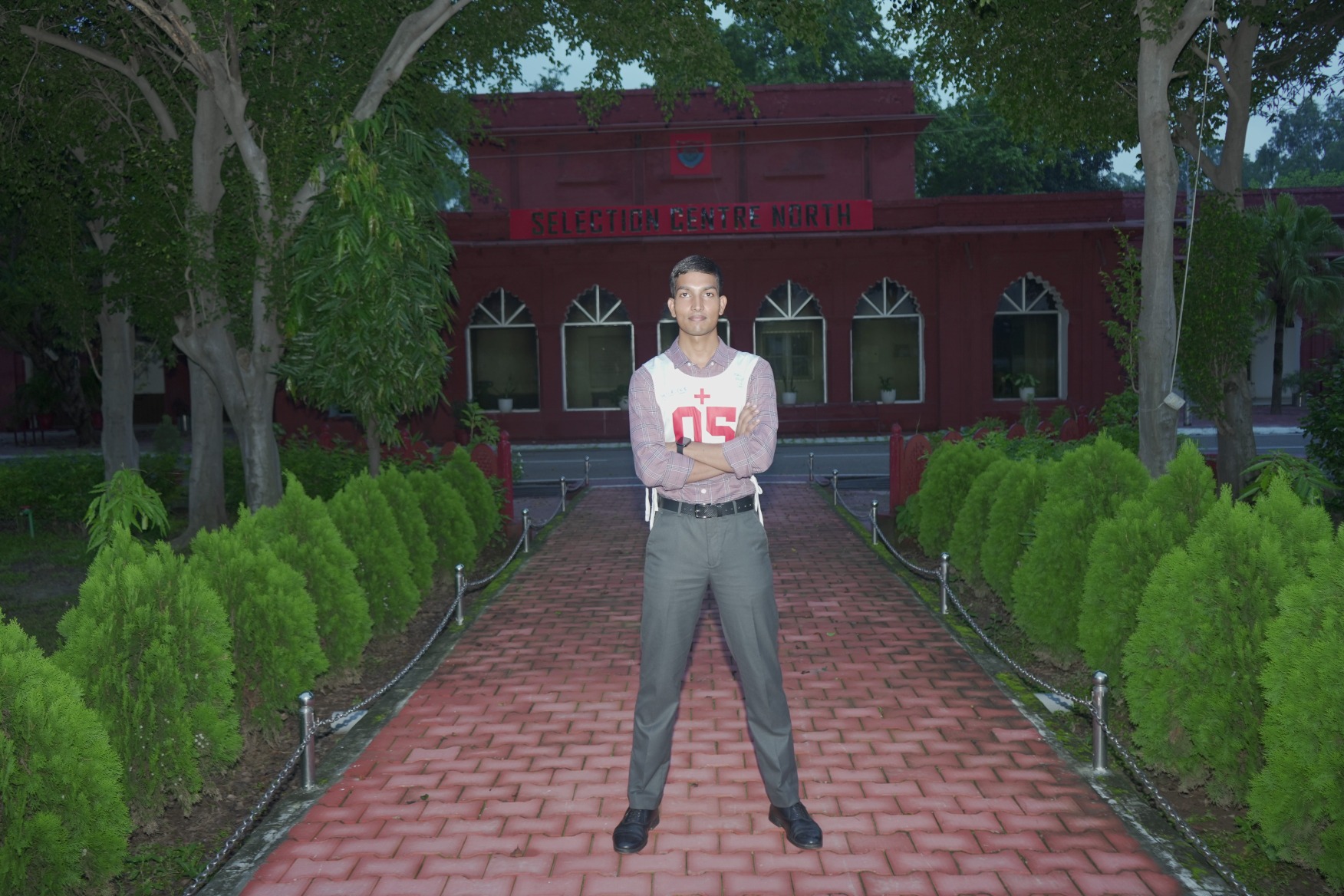
Sachin Jangir
Recommended for IMA 160 (AIR 140) & NDA 152 (AIR 128).